|
 |
◄"Reporter
for the National Geographic Magazine in Washington,
Harrisson Howell Walker
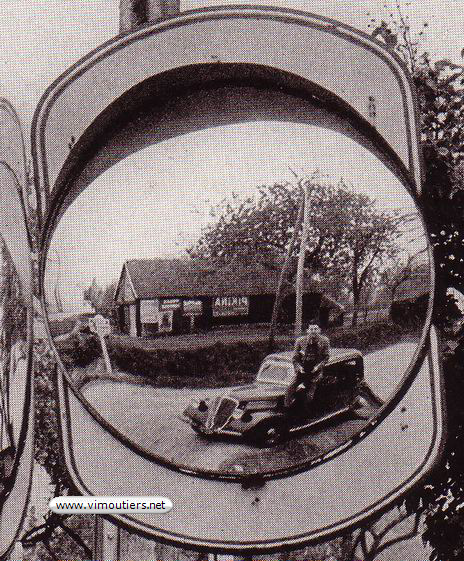
arrives in Vimoutiers on a sunny day of June,
driving an old Renault, full-to-bursting with super-sophisticated
photographic materials.
From the story of
Joe
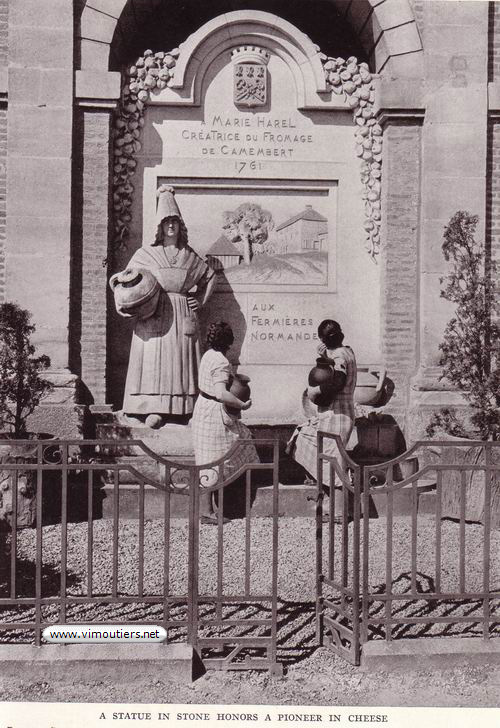
Knirim and Marie Harel
:
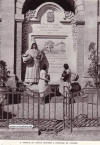
he makes the first topic of his reportage,
taking a picture of the
statue of Marie Harel, under the Halle of Vimoutiers
and concludes : "Still handing today, the Harel farmhouse helps a
few homes preserve a pleasant hamlet whose name delights
cheese-eaters around the world".
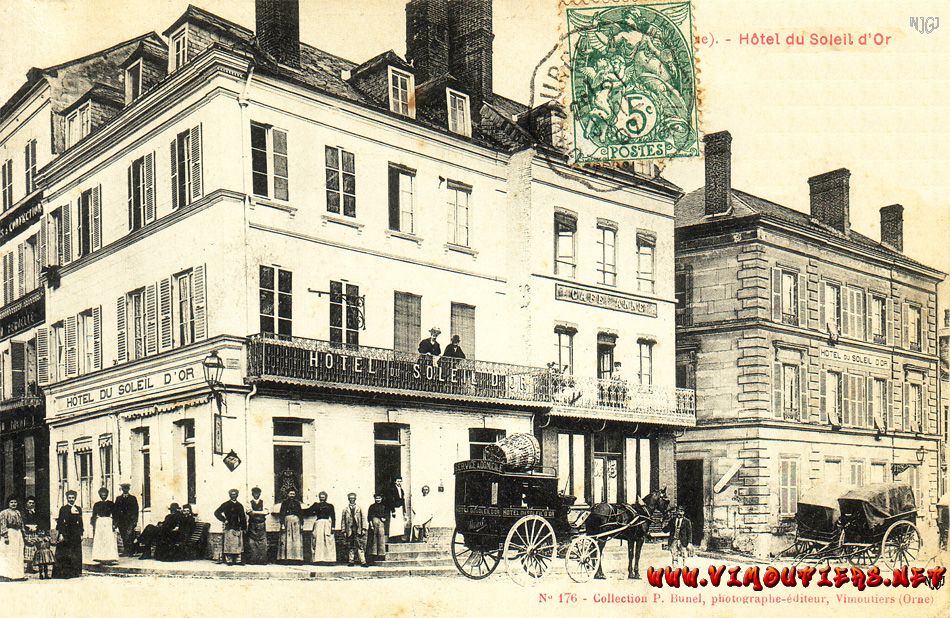
With a room in
the
Hotel du Soleil
d'Or, Harrison drives around.
Doctor Jean Boullard, chauvinistic supporter of the Pays
d'Auge, likes this pleasant man and he
guides him. The reporter writes ...:
|
|

|
 |
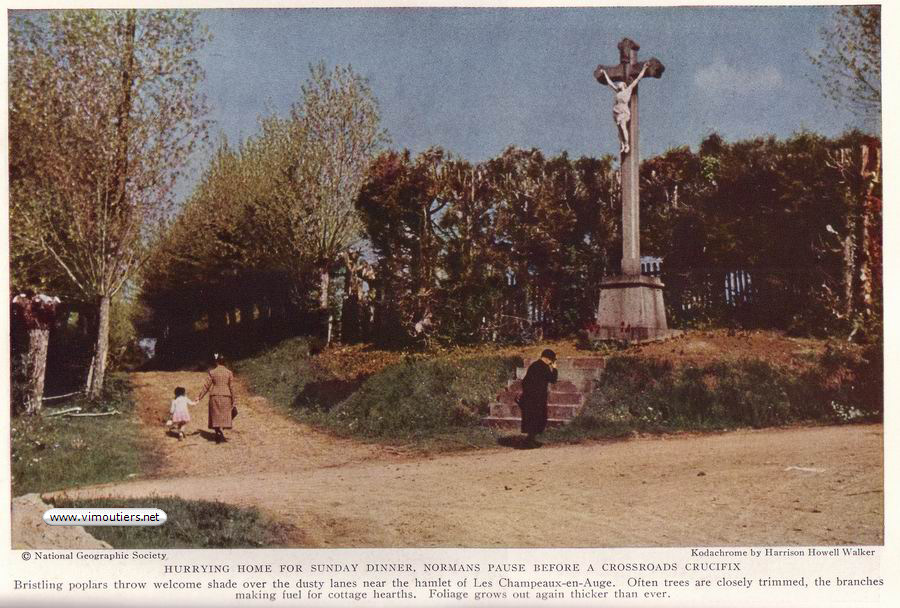
"...
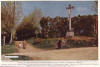
On a hilltop we stopped to look down on the
hamlet of Les Champeaux. As in most villages of Pays
d'Auge, only a few houses huddle around a church. Because it is
primarily pastoral country, people live in scattered farmsteads ...
- A magnificent view, isn't it ? The
doctor was enthusiastic.
- Magnificent ! I echoed, but I was
really watching country folk, plodding up a path, pause before a
crossroads crucifix ..."
|
|
|
|
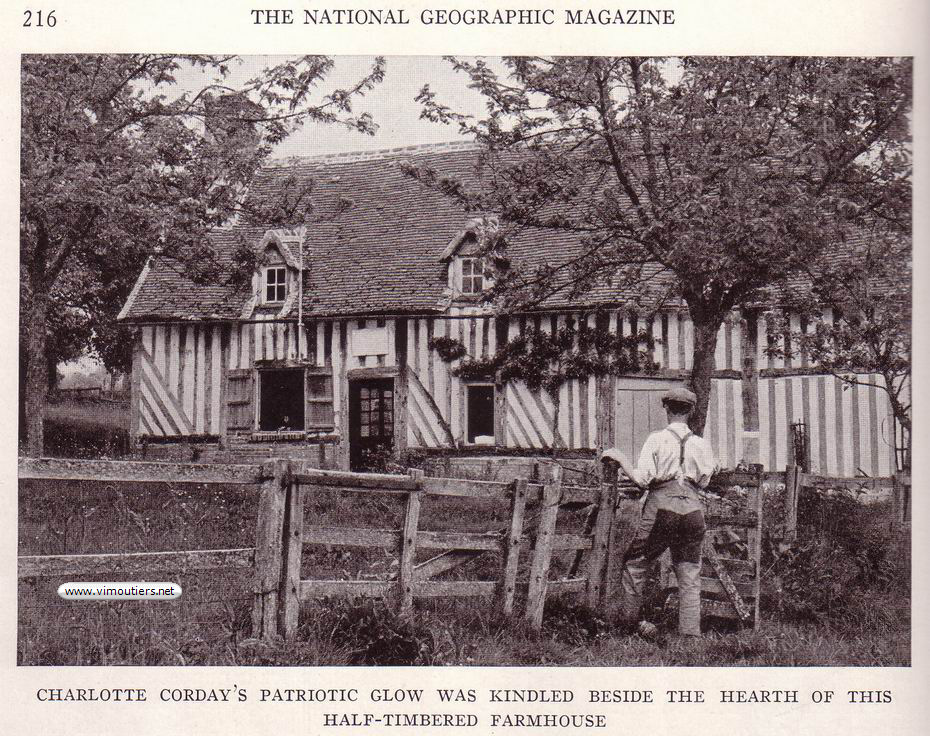
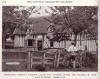
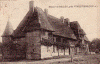
... "Near les
Ligneries, we walked through a crude gateway toward a
half-timbered farmhouse :
-
Charlotte
Corday
was born here in 1768, my friend said ... Of course you
remember reading of her.
- Well, I ...
- The excesses of the Revolution
maddened her, he continued. So she went to Paris and fatally stabbed
Marat, whom she considered responsible for so many deaths on the
scaffold.
... Today a young farmer and his wife
live here, warmed by the same hearth that kindled Charlotte's
patriotic glow".
|
 |
|
 |
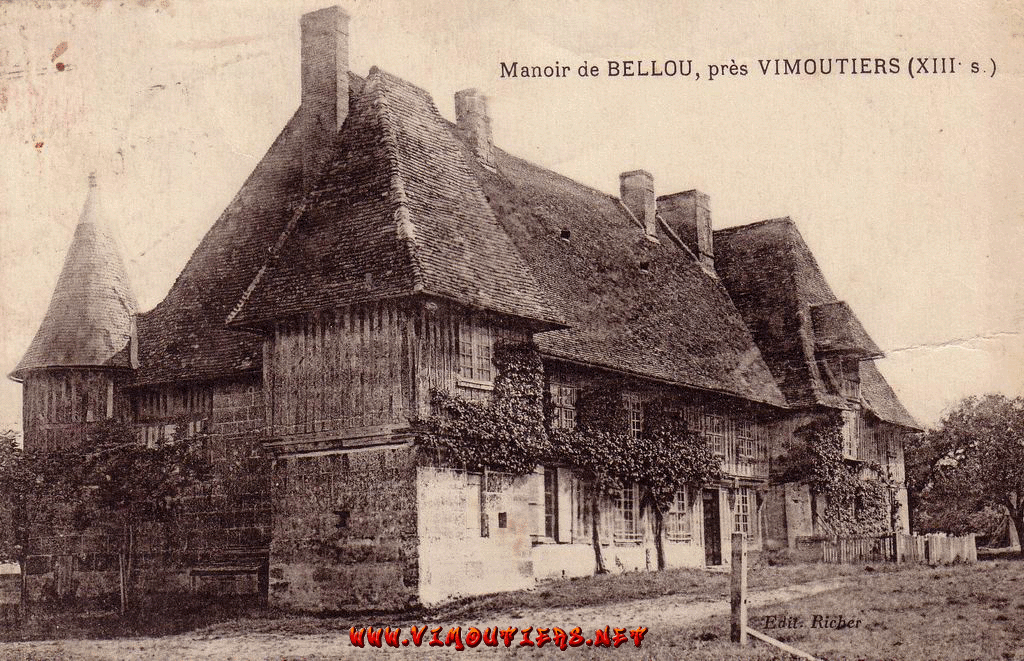
Another day,
after admiring the
Manoir
de Bellou,
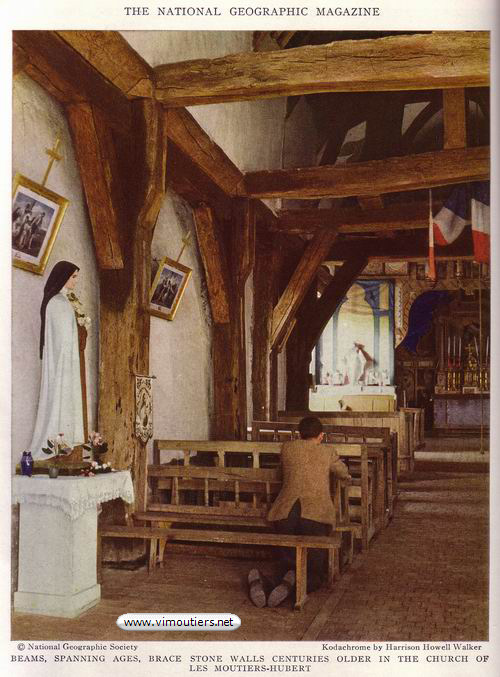
Harrison Walker stops in
Moutiers-Hubert
and pauses for a while in
the old
church
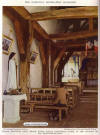
at the crossroads. Touched, he prays ... the time for a picture:
"... Several years ago, a fire left
only the building's sides standing. Rebuilt with timber, the
interior of the chapel is one of the few in wood to be found in
Normandy today ... Behind French flags, hangs a rope for ringing
bells that call farming folk to church ..."
On writing these
words,
the reporter is
unaware that this more than 700-years-old church will be destroyed
by bombing.
|
|
|
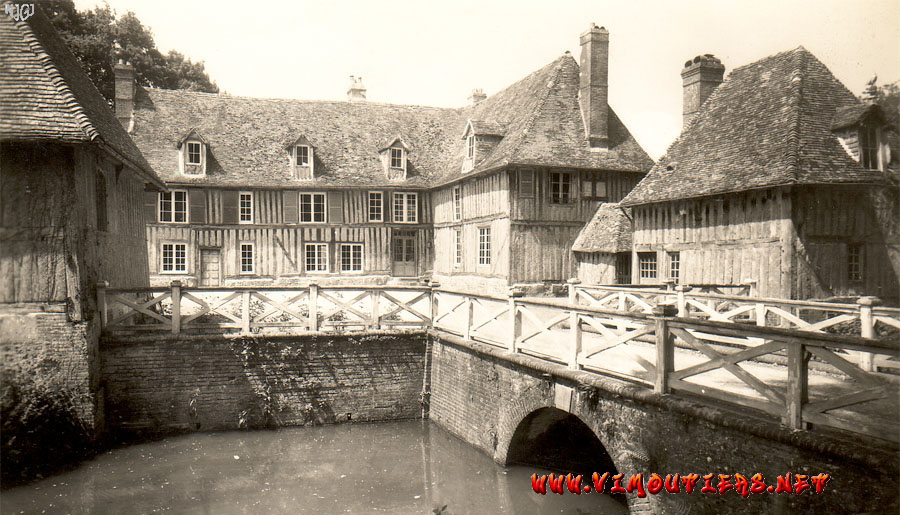
A few kilometers from
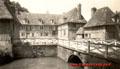
Vimoutiers, he spends a day at the
Manoir de la Cauvinière,
Notre-Dame de Courson, where :
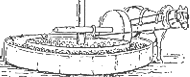
"Country Gentleman Robert
Ribard shoes his own horses, repairs his own windows or
woodwork or farm machinery, transplants or grafts his own
orchards and makes cider with a century-old press on the
premises. Around the circular trough a horse drags a stone
wheel that crushed apples to pulp ...". |
 |
|
|
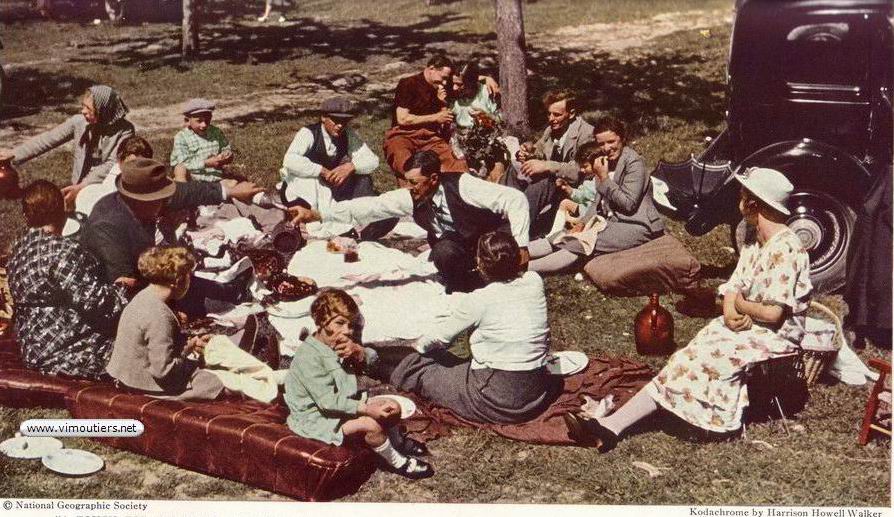
When he arrives in
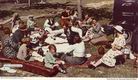
Preaux-Saint-Sebastien, it is the annual Feast ... :
" ... 4000 people come from every
direction in two-wheeled carts, automobils, on bicycles, on foot.
The whole village celebrates the rural festival and a band strikes
up a martial air to boom a juggling act ... a religious procession
follows a gleaming cross into the near-by church. Hundreds surge
behind and hundreds press around the door outside ...
Noon is coming with a big appetite !
... He joins a party under the trees : ... Eating, drinking,
laughing and love-making suggest scenes of rustic picnics painted by
certain Flemish artists"(sic).
|
|

|
|
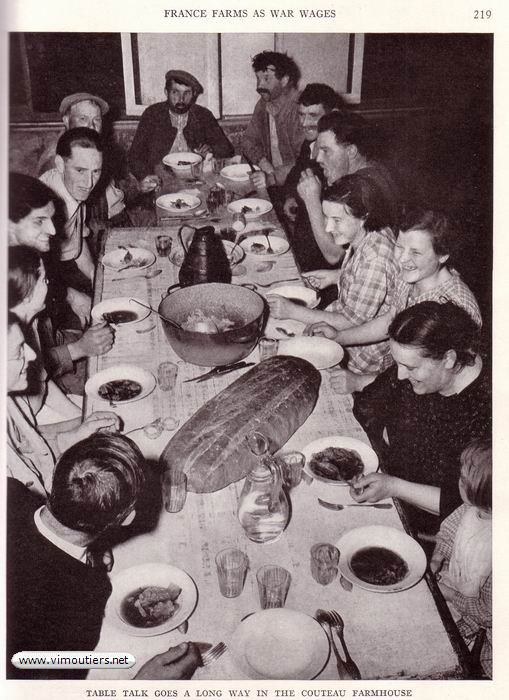
Continuing his
way, Harrison Walker stays a week on Mr Couteau's farm.
He wants to live with
Augerons (the natives of Pays d'Auge), see them at work,
follow them in pastures and walk the hollow paths :
|
|
|
|
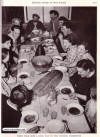
"He
gets up at 4:30 o'clock, time to milk some 24 cows, men and women
crouched at work on three-legged stools ... share their breakfast at
7 o'clock ... and it's not just a cup of coffee ... Eggs, sausages,
pâtés of duck or rabbit, lots of bread and butter, and even cider !
... At noon, a substantial meal and at 4 o'clock a collation,
similar to that of the morning ... By 7:30 in the evening, the last
milking and then the dinner at the long kitchen table. A large bowl
of soup, everyone carves his own slice of a bread almost a yard long
and a foot wide ...cider, poured from a rustic oak pitcher, washes
down meat and potatoes. ... Then, time for equally rituals rosary
kneeling and good-night embraces!"
|
|
|
|
Oh yes, now he gets it, his reportage.
When Harrisson Howell Walker leaves the Pays
d'Auge, he takes with him
pictures of happiness, some clichés of hard-working Normandy,
fragrance of hays, savors of authentic products,
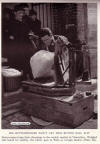
the souvenir of the so picturesque
weighing of the butter
under the Halle, and ...
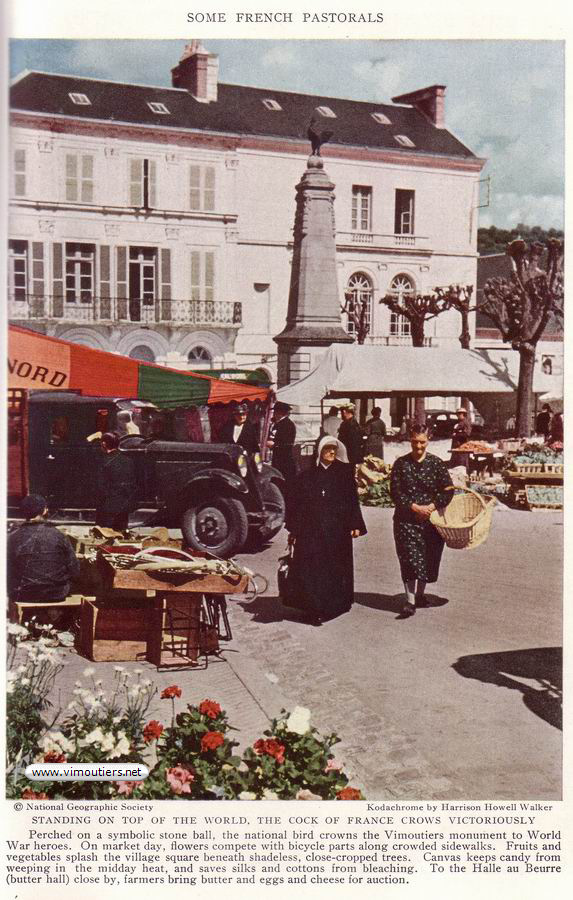
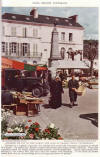
the kodachrome
photography of the market place of
Vimoutiers, taken on a monday afternoon,
the unique one ever made in color that
Vimonasteriens will name later "the photography of the century".
Summer is arriving and yes, of course ...
neither him nor anyone could imagine ...
|
 |
Extracts from the
reportage "France farms as war wages" which was published in
United States in February 1940
...Vimoutiers
received it by 1945-1946.
|